Overview
Betta splendens from Thailand and the Mekong basin — not Sri Lanka — has been selectively bred for centuries, producing the extraordinary finnage and colour forms we see today. Wild males are drab olive fish living in rice paddies, roadside ditches, and sluggish backwaters where oxygen is scarce. Their labyrinth organ lets them breathe atmospheric air directly, which is why they survive conditions that would kill most aquarium fish. That same hardiness makes a male betta an excellent first fish — but their legendary inter-male aggression means they are strictly one-per-tank, and tank mates must be chosen carefully.
Water Parameters
| Temperature | 24–30°C |
| pH | 6.0–7.5 |
| Hardness | 1–12 dGH |
| Ammonia / Nitrite | 0 ppm |
| Nitrate | <20 ppm |
| Flow | Very low — near still |
Bettas are sensitive to cold more than to chemistry. Drop the water below 22°C and they become lethargic, stop eating, and disease follows quickly. Keep a heater even in tropical Sri Lanka if your room cools significantly at night. Tannin-stained blackwater conditions at the lower pH end closely match their origin and tend to produce the best colour and least stress.
Tank Setup
A 20–40L tank is genuinely sufficient for one male, but bigger is always better — more water volume means more stable parameters. Long, shallow tanks outperform tall ones because bettas live in the top third of the water column. A tight-fitting lid is non-negotiable; bettas are routine jumpers. Filtration should provide biological processing with minimal surface agitation — a small sponge filter or baffled HOB works well. Still surface water also allows the labyrinth organ to function correctly; constant surface turbulence stresses them. Dense planting along the back and sides with open swimming space in front is ideal. Floating plants like frogbit are particularly useful, as males rest under them and will occasionally build bubble nests beneath broad floating leaves. Avoid fin-nipping tank mates entirely; even peaceful species that nip at long finnage (tiger barbs, many tetras in a small tank) will shred a betta’s tail overnight.
Diet & Feeding
In the wild, bettas eat insect larvae, small invertebrates, and zooplankton — their upturned mouths are designed for surface prey. In the aquarium, a high-quality micro-pellet or small floating pellet should form the daily staple. Supplement two to three times a week with frozen or live foods: bloodworm, daphnia, brine shrimp, and mosquito larvae are all taken greedily. Daphnia is especially useful for maintaining gut motility and preventing the constipation and swim bladder problems that plague bettas kept on dry food alone. Feed once daily, only what is consumed in two minutes, and fast the fish one day per week. Overfeeding is among the most common mistakes with this species.
Breeding Notes
Male bettas are bubble-nest builders. Condition a pair separately on live foods, then introduce the female into a divided tank or a floating breeding container inside the male’s tank so he can see her without injuring her. Once the male builds an active nest and the female shows vertical barring and a visible ovipositor, release her carefully. Spawning is an embrace directly beneath the bubble nest. The male wraps around the female and fertilises eggs as she releases them; the male then collects all eggs and places them in the nest. Remove the female immediately after spawning is complete — the male will guard and tend the nest aggressively and may kill her. Fry hatch in 24–36 hours and become free-swimming within two to three days. First foods are infusoria and green water, progressing to baby brine shrimp and micro worms. Remove the male once the fry are free-swimming.
Tank Mates
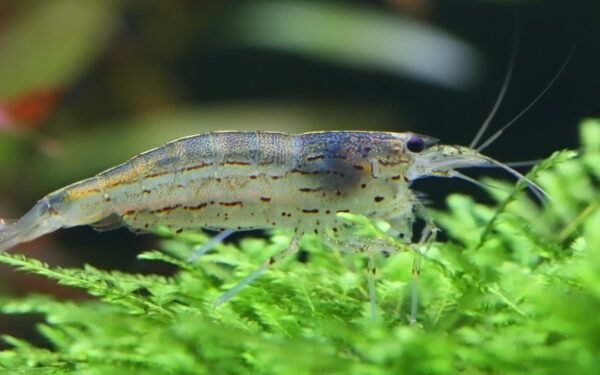
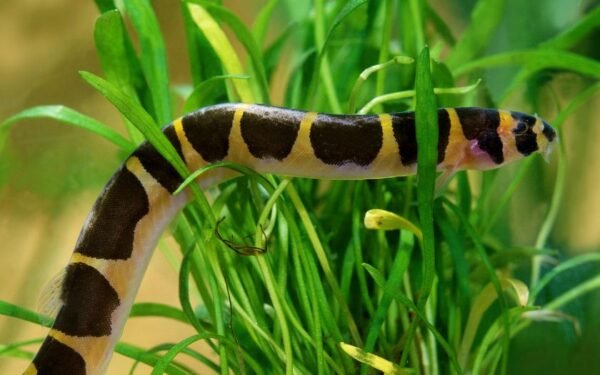
A male betta can live peacefully with many small, non-nippy species provided the tank is large enough and heavily planted. Bottom-dwelling peaceful species like pygmy corydoras, kuhli loaches, and otocinclus are reliable choices as they stay out of the betta’s territory near the surface. Small, fast-moving tetras such as ember tetras and chili rasboras work well in tanks of 40L and above. Amano shrimp and nerite snails are generally ignored, though very small cherry shrimp may occasionally be eaten. Avoid any colourful, long-finned species that the male may perceive as a rival, and never house two males together under any circumstances.
Compatible Tank Mates
Species that pair well with Betta (male) — linked where we've already covered them.
- Pygmy Corydoras Corydoras pygmaeus
- Kuhli Loach Pangio kuhlii
- Ember Tetra Hyphessobrycon amandae
- Chili Rasbora Boraras brigittae
- Otocinclus Otocinclus affinis
- Amano Shrimp Caridina multidentata
- Nerite Snail Neritina natalensis
Similar Fishes
Other species with comparable care, size, or role in a planted tank.
- Peaceful Betta Betta imbellis
- Strawberry Betta Betta falx
- Crescent Betta Betta luna
- Licorice Gourami Parosphromenus deissneri
- Sparkling Gourami Trichopsis pumila
- Dwarf Gourami Trichogaster lalius
Compatible Plants
Plants that work well in a tank stocked with Betta (male).
- Java Fern Microsorum pteropus
- Anubias Anubias barteri
- Amazon Frogbit Limnobium laevigatum
- Water Sprite Ceratopteris thalictroides
- Cryptocoryne wendtii Cryptocoryne wendtii
- Java Moss Taxiphyllum barbieri
- Salvinia Salvinia natans
Recommended Hardscape
Stone, wood, and substrate that suit Betta (male)'s natural habitat and behavior.
- Spider Wood Spider Wood
- Catappa Leaves Catappa Leaves
- Seiryu Stone Seiryu Stone
- Fine Dark Sand Fine Dark Sand
- Cholla Wood Cholla Wood