Overview
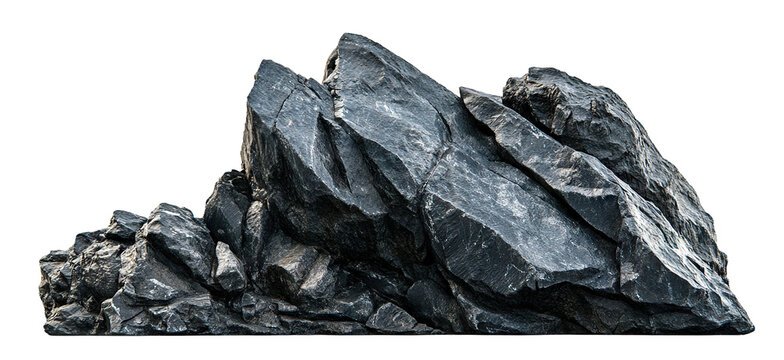
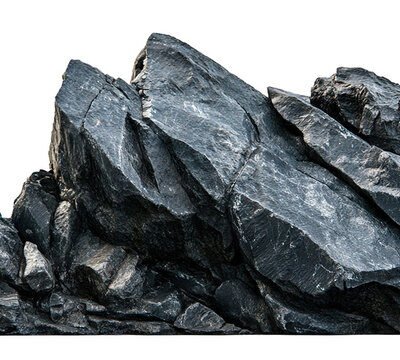
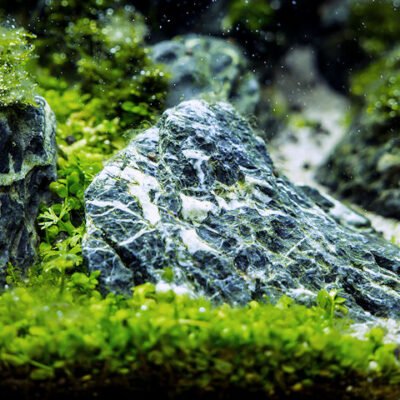
Seiryu Stone is the defining material of the Iwagumi layout — Takashi Amano’s mountain-scape aesthetic owes more to this single rock type than to any other element. The stone is a metamorphic limestone characterised by sharp, angular fracture planes, blue-grey to dark charcoal colouration, and white calcite veining that traces across its surface like frost. Genuine Seiryu is quarried in Japan, which is why it commands a premium price and why much of what is sold internationally — including in Sri Lanka — is either a close regional approximation or relabelled limestone from China or Southeast Asia. Visual inspection matters: authentic pieces are dense, heavy, and ring slightly when tapped; chalk-soft fakes crumble at the edges.
The aesthetic payoff is high. A well-chosen cluster of three to five pieces of varying sizes, arranged along the one-third compositional line with deliberate slope and layering, creates immediate depth and naturalistic tension. The stone’s cool tones pair exceptionally well with bright green carpeting plants and contrast sharply against dark substrates like Amazonia or black sand.
Water Chemistry Effect
Seiryu Stone contains calcium carbonate and will measurably raise both pH and general hardness (GH) over time. The effect is gradual rather than sudden, but in small or heavily stocked tanks it accumulates. This is the single most important fact a beginner needs to understand before purchasing: if you are keeping soft-water species, or using a buffered substrate like ADA Amazonia to achieve a low pH for plant growth, Seiryu will work against you. Test your water weekly for the first month after adding new pieces.
| pH shift | +0.3 to +1.0 depending on tank volume and stone mass |
| GH increase | Moderate to significant; expect 2–5 °dH rise in smaller tanks |
| KH increase | Slight to moderate; buffers against pH crash |
| TDS impact | Rises steadily; monitor with a TDS pen weekly during break-in |
The rate of dissolution slows once the surface carbonate layer is exhausted, but it never fully stops. Larger quantities of stone in smaller volumes produce the most dramatic swings.
Preparation
A thorough rinse under running water is the minimum preparation — scrub each piece with a stiff brush to remove loose grit and dust, which will cloud your tank if skipped. Boiling is not necessary and does not meaningfully reduce the stone’s buffering capacity. Some aquascapers soak Seiryu in plain water for one to two weeks, testing the water daily, to get a rough sense of how much chemistry shift to expect before the stone enters the display tank. This is worth doing if your parameters are already marginal. Do not use acid treatments to neutralise the stone unless you are very experienced; the surface finish changes and the internal carbonate structure is unaffected anyway.
Placement & Use
Seiryu is almost always used as the dominant focal element rather than background filler. The classic Iwagumi arrangement uses one large oyaishi (parent stone), one or two fukuseki (secondary stones), and several soeishi (accent stones), all oriented with their natural strata lines running in the same direction — typically angled slightly toward the viewer. Burying the bases one to two centimetres into the substrate locks them in place and looks far more natural than stones sitting flat on the surface. Group pieces in odd numbers. Avoid symmetry. The negative space between stones is as deliberate as the stones themselves.
In nano tanks under 40L, limit yourself to two or three small pieces; the cumulative water chemistry effect in a small volume is substantial.
Compatible Fish
Given Seiryu’s tendency to raise pH and hardness, pair it with species that are comfortable in neutral to slightly alkaline, moderately hard water rather than soft-water specialists.
Compatible Plants
Choose plants tolerant of moderate hardness, or epiphytes that can be tied directly to the stone’s surface and are indifferent to elevated GH.
Compatible Fish
Fish that do well in a tank featuring Seiryu Stone.
- Celestial Pearl Danio Danio margaritatus
- White Cloud Mountain Minnow Tanichthys albonubes
- Endler's Livebearer Poecilia wingei
- Hillstream Loach Sewellia lineolata
- Amano Shrimp Caridina multidentata
- Neon Stiphodon Goby Stiphodon ornatus
- Ember Tetra Hyphessobrycon amandae
Compatible Plants
Plants that pair well with this piece in a layout.
- Java Fern Microsorum pteropus
- Mini Pellia Riccardia chamedryfolia
- Dwarf Hairgrass Eleocharis parvula
- Willow Moss Fontinalis antipyretica
- Fissidens Moss Fissidens fontanus
- Glossostigma Glossostigma elatinoides
- Anubias Nana Petite Anubias barteri var. nana