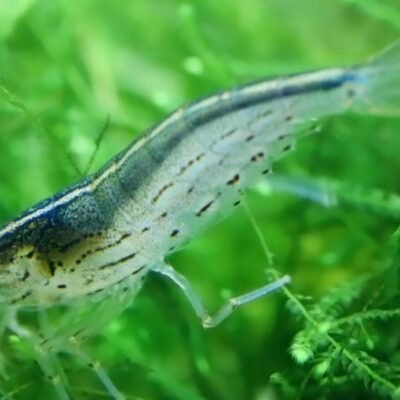
Overview
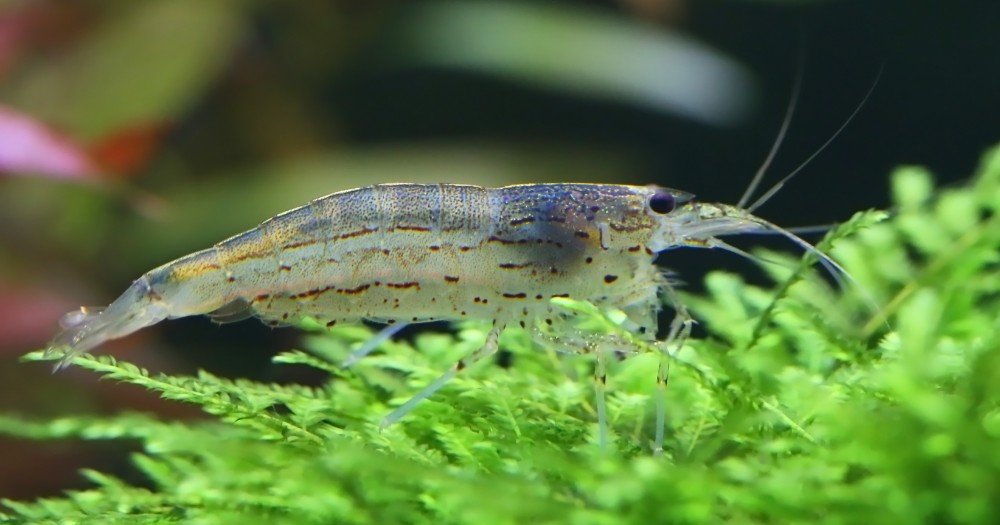
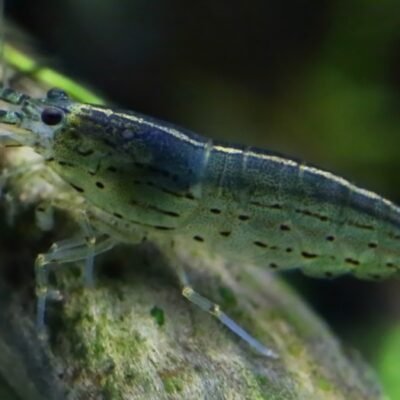
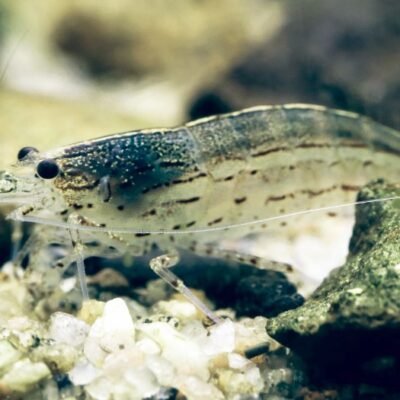
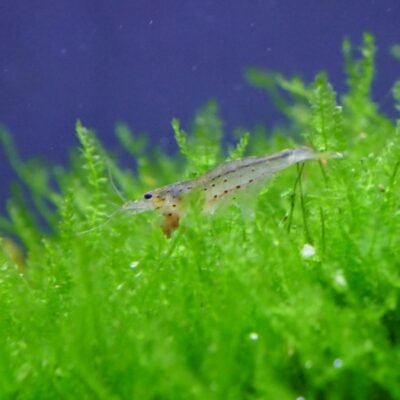
Takashi Amano popularised Caridina multidentata in the early 1990s, and for good reason — these shrimp are the single most effective algae-management invertebrate you can put in a planted tank. Native to Japan and surrounding coastal river systems in East Asia, they reach 4–5 cm as adults, making them large enough to hold their own alongside small fish but small enough to leave delicate plant tips undisturbed. They work best in groups; a single Amano shrimp in a 120-litre tank looks decorative but accomplishes very little. Put in ten or fifteen and you’ll notice thread algae disappearing within days. Unlike cherry shrimp, they show no interest in breeding in freshwater, which makes population management straightforward — what you stock is what you keep.
Water Parameters
| Temperature | 20–26°C |
| pH | 6.5–7.5 |
| Hardness | 6–15 dGH |
| Ammonia / Nitrite | 0 ppm |
| Nitrate | <20 ppm |
| TDS | 150–250 ppm |
Amanos are more tolerant than dwarf Neocaridina varieties, but they are not bulletproof. They’re particularly sensitive to ammonia spikes during cycling and to sudden parameter swings — drip acclimation over 60–90 minutes is non-negotiable. Avoid temperatures above 27°C consistently; at 28–29°C they become lethargic and mortality rises. Heavily planted, well-filtered setups with stable parameters suit them far better than bare or lightly stocked tanks where water quality is less buffered.
Tank Setup
A minimum of 40 litres works for a group of six, but 60–80 litres gives you the stability and surface area to keep a meaningful colony. Dense planting is essential — not just for water quality but because Amanos graze across plant surfaces constantly, picking off algae and biofilm. They appreciate open midground areas to forage, contrasted with shaded hiding spots (driftwood, rocks, mosses) to retreat to during moulting, which happens roughly every 4–6 weeks. Newly moulted individuals are vulnerable for several hours; cover is not optional. Filtration should be sponge-guarded or fitted with a pre-filter to prevent shrimp from being sucked in. Flow should be moderate — these shrimp originate from clean, oxygenated river systems, not stagnant water.
Diet & Feeding
In a well-established planted tank with algae present, supplemental feeding is minimal. They’ll continuously graze on green spot algae, hair algae, thread algae, and surface biofilm. Once algae loads drop — which is the goal — supplement with blanched vegetables (zucchini, spinach, cucumber), dedicated shrimp wafers, or small sinking algae wafers. Hikari Shrimp Cuisine and similarly formulated pellets work well. Avoid overfeeding; uneaten food deteriorates water quality quickly. Amanos will also scavenge fish food that reaches the substrate, which helps with waste management but shouldn’t be their primary nutrition source. Copper in any form — including many plant fertilisers and some fish medications — is lethal at even low concentrations. Always check fertiliser and medication labels before dosing a shrimp tank.
Breeding Notes
Breeding C. multidentata in captivity is genuinely difficult and not something most hobbyists attempt successfully at home. Females carry eggs and release larvae (zoeae) that require brackish or near-marine water (salinity around 30–33 ppt) to develop through their larval stages. Over several weeks, the larvae must be transitioned back to freshwater as they metamorphose into juvenile shrimp. Getting the salinity, temperature, and microalgae food source right simultaneously is the challenge. Unless you’re setting up a dedicated brackish rearing tank with marine salt and cultured phytoplankton, expect no reproduction from your colony. This is actually convenient for most planted tank setups — the shrimp population stays exactly where you want it.
Tank Mates
Amanos are large enough to coexist with a wider range of fish than dwarf shrimp species, but they’re not invincible. Avoid any fish large enough to swallow a 4–5 cm shrimp whole, and avoid known shrimp predators like gourami, large barbs, or cichlids. Excellent companions include small schooling rasboras and tetras, otocinclus, corydoras, and other peaceful nano species. Chili rasboras and ember tetras are so small they ignore the shrimp entirely. Other invertebrates — nerite snails, mystery snails, and even smaller dwarf shrimp — coexist without issue, though very small neocaridina juveniles may occasionally be picked at. Keep an eye on new additions for the first week.
Compatible Tank Mates
Species that pair well with Amano Shrimp — linked where we've already covered them.
- Chili Rasbora Boraras brigittae
- Ember Tetra Hyphessobrycon amandae
- Otocinclus Otocinclus affinis
- Pygmy Corydoras Corydoras pygmaeus
- Nerite Snail Neritina natalensis
- Harlequin Rasbora Trigonostigma heteromorpha
- Green Neon Tetra Paracheirodon simulans
Similar Fishes
Other species with comparable care, size, or role in a planted tank.
- Cherry Shrimp Neocaridina davidi
- Crystal Red Shrimp Caridina cantonensis
- Bamboo Shrimp Atyopsis moluccensis
- Ghost Shrimp Palaemonetes paludosus
- Blue Velvet Shrimp Neocaridina davidi
- Suptiger Shrimp Caridina mariae
Compatible Plants
Plants that work well in a tank stocked with Amano Shrimp.
- Java Moss Taxiphyllum barbieri
- Anubias Nana Anubias barteri var. nana
- Java Fern Microsorum pteropus
- Bucephalandra Bucephalandra sp.
- Christmas Moss Vesicularia montagnei
- Dwarf Hairgrass Eleocharis parvula
- Rotala Rotundifolia Rotala rotundifolia
Recommended Hardscape
Stone, wood, and substrate that suit Amano Shrimp's natural habitat and behavior.
- Spider Wood Spider Wood
- Seiryu Stone Seiryu Stone
- Lava Rock Lava Rock
- Aqua Soil Amazonia Aqua Soil Amazonia