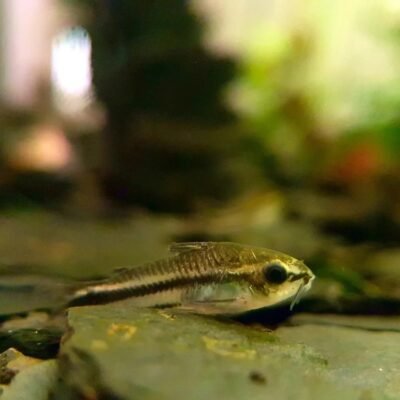
Overview
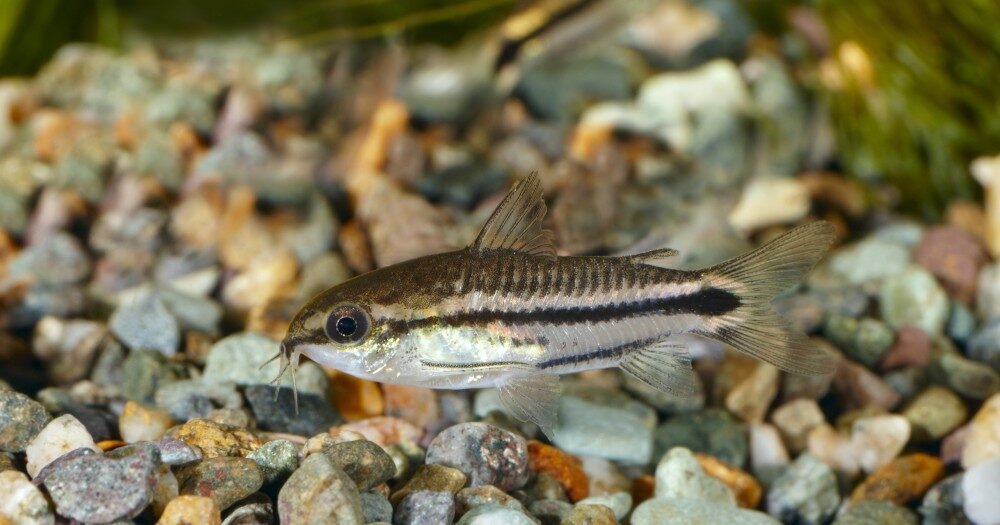
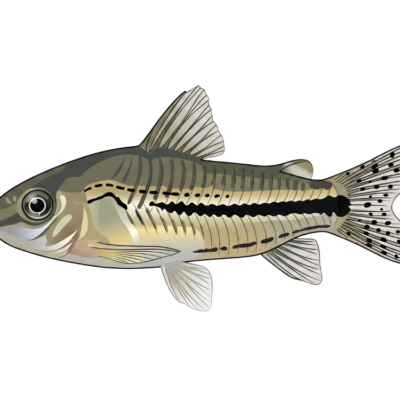
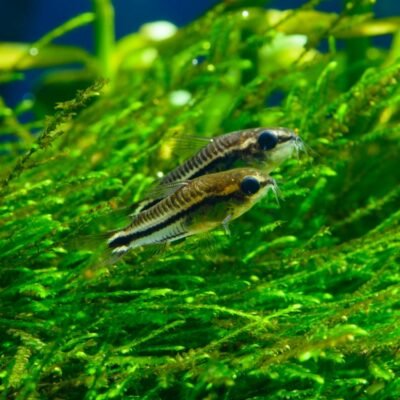
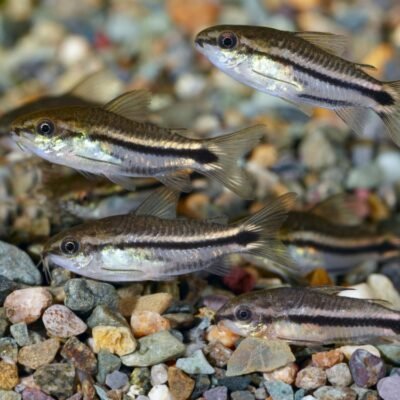
Corydoras pygmaeus originates from the Rio Madeira basin in Brazil, where it inhabits slow-moving, heavily vegetated tributaries with soft, slightly acidic water. Unlike most corydoras that spend their lives on the substrate, pygmy cories are genuinely mid-water schooling fish — you’ll regularly see them hovering in open water column space, particularly when kept in numbers of ten or more. This behaviour surprises many newcomers who expect all cories to be bottom-dwellers. At under 3cm fully grown, they are among the smallest members of the Corydoridae family and scale perfectly into nano planted tanks from 40 litres upward. Their tolerance for a reasonable hardness range makes them accessible to most Sri Lankan tapwater conditions without extensive RO treatment, though they visibly settle and colour up better in softer, tannin-stained water.
Water Parameters
| Temperature | 22–26°C |
| pH | 6.0–7.5 |
| Hardness | 2–15 dGH |
| Ammonia / Nitrite | 0 ppm |
| Nitrate | <20 ppm |
| Flow | Gentle to moderate |
Tank Setup
A fine sand substrate is non-negotiable — play sand or pool-grade silica sand works well and is inexpensive locally. Pygmy cories do forage at the bottom despite their mid-water tendencies, and coarse gravel abrades their delicate barbels over time, leading to secondary infections. Dense planting along the back and sides with some open mid-water swimming space replicates their natural environment well. Indian almond leaves or a small piece of driftwood releasing tannins will noticeably improve their colouration and ease any adaptation stress. Filtration should turn the tank volume over three to four times per hour, but avoid strong direct flow — a spray bar angled at the glass surface or a sponge filter is ideal. Dim or moderate lighting suits them; heavily lit tanks without shaded zones cause them to school tightly in corners rather than exploring openly. Keep groups at ten or above — fewer than eight and they tend to stay hidden and forage less confidently.
Diet & Feeding
In the wild these fish pick continuously at biofilm, detritus, and tiny invertebrates. In the aquarium they accept a wide range of small foods readily. Hikari Micro Wafers and crushed high-quality sinking pellets form a solid staple. Supplement two to three times a week with micro-sized live or frozen foods — baby brine shrimp, micro worms, and Daphnia are all taken greedily and noticeably improve conditioning for breeding. Because they do spend time mid-water, ensure some food drifts down rather than relying solely on sinking wafers; frozen bloodworm defrosted and released near the surface will be intercepted in the water column before it reaches the bottom. Feed once or twice daily in small amounts — they have small stomachs and uneaten food decays quickly in a planted tank.
Breeding Notes
Pygmy cories are among the easier corydoras to breed once conditioned. Spawn is typically triggered by a partial water change (around 20-25%) with slightly cooler water, mimicking seasonal rainfall. Condition the group for two weeks with daily live or frozen food, then perform the cool water change in the morning. Eggs are scattered individually on plant leaves, the aquarium glass, and fine-leaved plants — Java moss catches many. Eggs hatch in about three days at 25°C. The fry are tiny and require infusoria or commercial fry food (Hikari First Bites) for the first week before graduating to baby brine shrimp. Raising fry in the main planted tank is feasible if predation pressure is low, but a small dedicated 15-20L grow-out tank gives far better survival rates.
Tank Mates
Their very small size means tank mate selection matters more than it does for standard-sized corydoras. Avoid anything with a mouth large enough to swallow a 2.5cm fish, and avoid nippy species that will harass a shoal mid-water. Ideal companions include other small, peaceful South American nano fish such as ember tetras and green neon tetras, which share similar water parameter preferences. Otocinclus catfish make excellent co-bottom dwellers that occupy a different ecological niche without competition. Celestial pearl danios and chili rasboras from South-East Asia work well in similarly soft, planted setups. Small, peaceful dwarf shrimp such as Neocaridina or Caridina species coexist without issue — the cories largely ignore adult shrimp and are too slow and small to threaten them. Avoid dwarf cichlids that show strong territorial behaviour during spawning, as even mild aggression from a pair of apistogramma can suppress an entire pygmy cory shoal.
Compatible Tank Mates
Species that pair well with Pygmy Corydoras — linked where we've already covered them.
- Ember Tetra Hyphessobrycon amandae
- Green Neon Tetra Paracheirodon simulans
- Otocinclus Catfish Otocinclus affinis
- Celestial Pearl Danio Danio margaritatus
- Chili Rasbora Boraras brigittae
- Cherry Shrimp Neocaridina davidi
- Exclamation Point Rasbora Boraras urophthalmoides
Similar Fishes
Other species with comparable care, size, or role in a planted tank.
- Dwarf Corydoras Corydoras hastatus
- Salt and Pepper Catfish Corydoras habrosus
- False Julii Corydoras Corydoras trilineatus
- Mosquito Rasbora Boraras brigittae
- Norman's Lampeye Killifish Poropanchax normani
- Sparkling Gourami Trichopsis pumila
- Micro Rasbora Microdevario kubotai
Compatible Plants
Plants that work well in a tank stocked with Pygmy Corydoras.
- Java Moss Taxiphyllum barbieri
- Java Fern Microsorum pteropus
- Anubias Nana Anubias barteri var. nana
- Monte Carlo Micranthemum tweediei
- Cryptocoryne Wendtii Cryptocoryne wendtii
- Flame Moss Taxiphyllum sp. 'Flame'
- Eleocharis Mini Eleocharis parvula
Recommended Hardscape
Stone, wood, and substrate that suit Pygmy Corydoras's natural habitat and behavior.
- Fine White Silica Sand Fine White Silica Sand
- Spider Wood Spider Wood
- Indian Almond Leaves Indian Almond Leaves
- Mopani Wood Mopani Wood
- Seiryu Stone Seiryu Stone