Overview
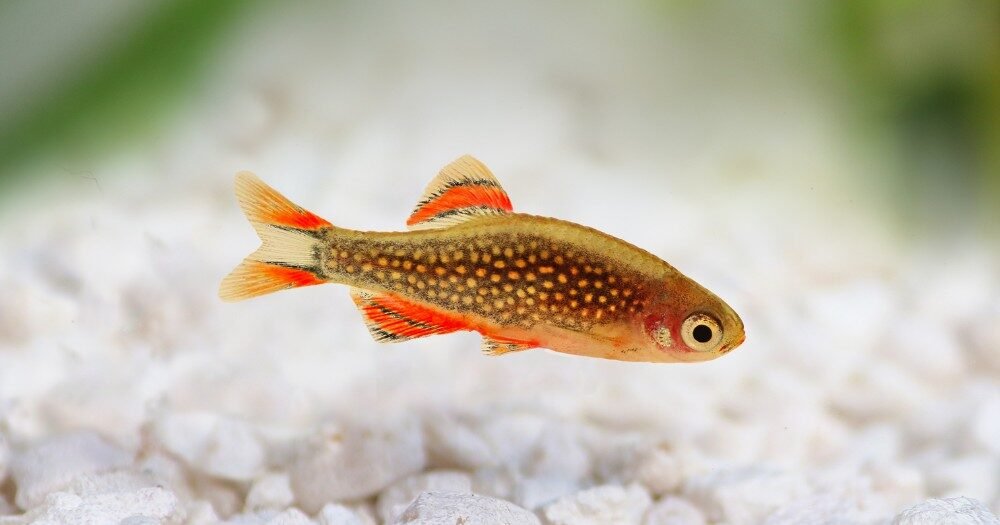
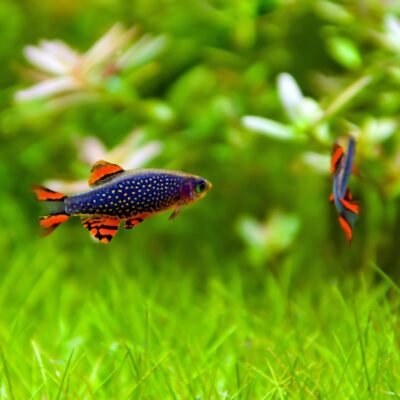
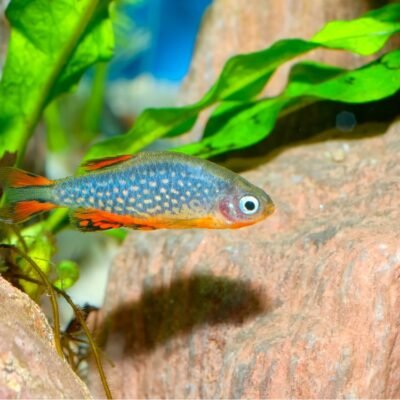
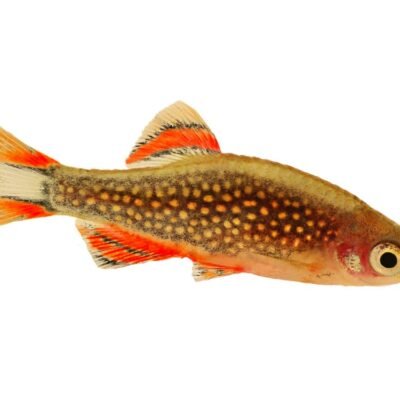
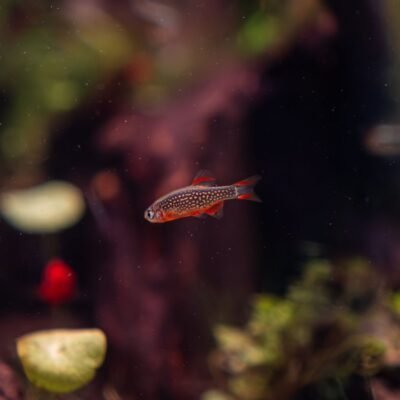
Celestial Pearl Danios — still commonly sold under their original trade name Galaxy Rasbora — were first described from shallow, heavily vegetated pools in Hopong, Shan State, Myanmar in 2006. They’re not a rasbora at all, and the danio designation suits their biology better: short-lived, fast-maturing, and with males that flash intensely iridescent spots on a dark olive-blue body. Females are plumper and more muted but still attractive. Despite their tiny adult size of around 2.5–3cm, these fish have real personality in a well-planted nano tank and are one of the few species where you can observe genuine spawning behavior without specialist equipment.
One practical note before you buy: wild populations suffered serious collection pressure immediately after the species’ discovery, and most stock today is captive-bred. Sourcing from reputable breeders matters both ethically and practically — wild-caught individuals are more skittish and often carry parasites.
Water Parameters
Their native habitat sits at altitude, which means water that runs distinctly cooler than most tropical fish rooms. Keeping them at 24–26°C long-term shortens lifespan and increases susceptibility to bacterial infections. Aim for the lower half of the range.
| Temperature | 20–26°C (optimal 22–24°C) |
| pH | 6.5–7.5 |
| Hardness | 2–12 dGH |
| Ammonia / Nitrite | 0 ppm at all times |
| Nitrate | Below 20 ppm |
| Flow | Gentle — low-flow filter output preferred |
These fish are noticeably sensitive to ammonia spikes. A fully cycled tank before introduction is non-negotiable; don’t rush the cycle hoping they’ll be fine.
Tank Setup
A 40–60L planted tank is the sweet spot. Dense background planting with Pogostemon helferi, Eleocharis, or fine-leaved mosses like Christmas moss replicates their meadow-pool habitat and gives females refuge from persistent males. Open swimming corridors mid-tank let you actually watch them. Substrate colour matters more than people expect — dark sand or fine gravel makes the pearl spotting pop dramatically against the fish’s dark flank. Bright white substrate washes them out and stresses them.
Floating plants to diffuse surface light are worth adding: Water Sprite or Salvinia works well. Keep the lid on — they are capable jumpers despite their size, and surface gaps will cost you fish. A gentle sponge filter or low-output hang-on-back maintains water quality without creating the current they dislike.
Keep the group large. Ten individuals is a workable minimum; at fewer than six, males focus aggression on fewer females and you’ll start seeing fin damage and stressed, hiding females.
Diet & Feeding
In the wild these fish pick microinvertebrates, tiny crustaceans, and zooplankton from vegetation. In the tank, their small mouths mean standard tropical flake is too large and nutritionally mediocre. Finely crushed micro-pellets (0.2–0.5mm range) form a good staple. Supplement regularly with live or frozen micro-foods: baby brine shrimp, micro-worms, Daphnia, and cyclops are all accepted eagerly and noticeably improve colour and spawning readiness. Feed small amounts two to three times daily rather than one large feed — stomachs are tiny and excess food degrades water quality fast in a small system.
Breeding Notes
CPDs breed readily in a well-maintained planted tank — you will often find fry without making any deliberate effort. For a more controlled approach, a separate 15–20L breeding tank with a mesh or fine moss base to protect eggs from the adults is effective. Condition both sexes with live food for a week beforehand. Males display a characteristic T-position alongside females during spawning; eggs are scattered into fine plants or moss. Remove adults after spawning unless the tank has enough dense cover to protect fry naturally. Fry are tiny at hatch and need infusoria or commercial first-foods (Sera Micron, Hikari First Bites) for the first week before accepting baby brine shrimp nauplii. Water changes during the fry stage should be small and matched carefully for temperature to avoid shocking them.
Tank Mates
Stick to similarly sized, peaceful species. Ember Tetras, Boraras brigittae, Pygmy Corydoras (Corydoras pygmaeus or hastatus), and small Otocinclus work well. Avoid anything nippy or large enough to view CPDs as food — Tiger Barbs, larger danios, and gouramis are all poor choices. Dwarf shrimp (Neocaridina or Caridina) are generally safe with adults but fry will be predated. In a species-only setup or with shrimp-only companions, CPDs show their best colours and most natural behaviour.