You Added Shrimp Before the Tank Was Cycled — Here’s What to Do Right Now
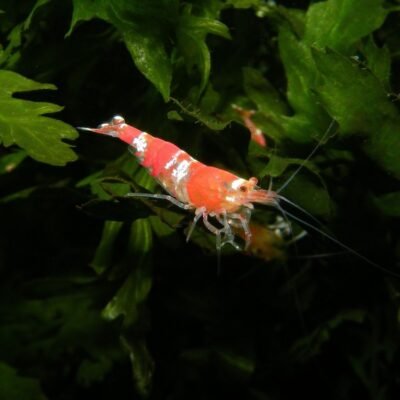
If your shrimp are already in an uncycled tank, the short answer is this: you can cycle safely around them, but only if you keep total ammonia (NH3 + NH4⁺) below 0.25 ppm and nitrite below 0.25 ppm through a combination of small daily water changes, dechlorinated top-offs, and a very light feeding schedule. Shrimp tolerate trace ammonia better than most fish, but they’re exquisitely sensitive to nitrite — even 0.5 ppm can kill a Neocaridina colony in 24 hours. The protocol below is built around that asymmetry.
A fully fishless cycle normally takes 4–8 weeks. With shrimp in the tank, you’re essentially doing a “silent cycle” with a live bioload — slower to establish, but doable without casualties if you stay ahead of the chemistry. I’ve cycled four 10-gallon shrimp tanks this way and only ever lost shrimp when I skipped a test day and let nitrite spike unchecked.
API Freshwater Master Test Kit
The only liquid test kit accurate enough to catch the 0.25–0.5 ppm ammonia and nitrite thresholds that matter when cycling with shrimp in the tank.
Why Cycling a 10 Gallon Tank Is Harder With Shrimp In It
A 10-gallon is small enough that a single overfed day can swing ammonia from 0 to 1 ppm overnight. That’s the core difficulty: you need enough ammonia as a food source for Nitrosomonas bacteria to colonize, but not so much that your shrimp are poisoned. In a larger tank you’d have more buffering time. Here you don’t.
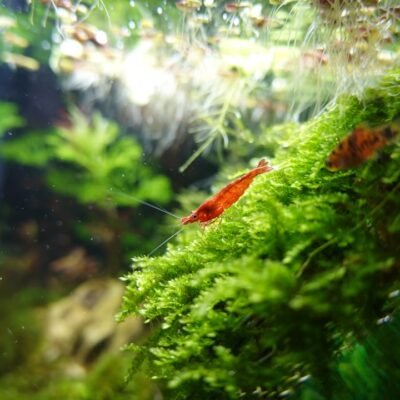
The second problem is that most beginner cycling products — liquid ammonia dosing, bacteria-starter dumps — were designed for fishless setups. Dumping a full dose of Dr. Tim’s Ammonium Chloride into a tank with Red Cherry Shrimp sitting in it is a fast way to lose all of them. You’ll need to work with much smaller amounts and accept that the cycle will take longer.
The Nitrogen Cycle in Brief
Ammonia (from shrimp waste and uneaten food) feeds Nitrosomonas bacteria, which convert it to nitrite. Nitrospira bacteria then convert nitrite to nitrate, which is relatively harmless until it climbs above ~40 ppm. Your tank is “cycled” when you can detect zero ammonia and zero nitrite 24 hours after adding a small ammonia source. Until that point, both compounds will spike and crash unpredictably — which is exactly why you need to test daily.
Test Kit, Parameters, and What the Numbers Mean for Shrimp
Buy the API Freshwater Master Test Kit if you don’t already have it. Test strips are not accurate enough for this situation — I’ve seen strips read 0 ammonia while the liquid test showed 0.5 ppm. That margin gets shrimp killed.
| Parameter | Safe for Shrimp | Act Immediately Above |
| Ammonia (total) | 0 – 0.25 ppm | 0.5 ppm |
| Nitrite | 0 – 0.25 ppm | 0.5 ppm |
| Nitrate | 0 – 20 ppm | 40 ppm |
| pH | 6.8 – 7.8 (Neocaridina) | Below 6.5 or above 8.2 |
| Temperature | 68 – 76°F / 20 – 24°C | Above 80°F stresses shrimp and spikes toxicity |
The Step-by-Step Protocol for Cycling With Shrimp Already In the Tank
Week 1: Stabilize First, Cycle Second
Before you think about accelerating the cycle, make sure the shrimp are stable. Do a 30% water change with dechlorinated water matched to tank temperature, dose with Seachem Prime at 2–3× the normal rate (Prime neutralizes ammonia and nitrite temporarily, buying you 24–48 hours even if levels spike), and pull out any dead plant matter or uneaten food you can see. Test the water immediately after the change and again 24 hours later. Log the numbers — you need a trend line, not a single data point.
Feed the shrimp nothing for the first 48 hours. Shrimp can go a week without food comfortably, and the biofilm already on your substrate, hardscape, and glass is more than enough to sustain them. Every bit of food you skip is ammonia that won’t spike.
Accelerating Colonization Without Dosing Ammonia
The fastest way to seed nitrifying bacteria in a tank with livestock is to borrow established media. A fistful of filter floss or a single sponge insert from a cycled tank — a friend’s shrimp tank, your local fish store’s holding system — will contain millions of Nitrospira already. Drop it into your filter or stuff it alongside your existing media. This can cut your cycle time from 6 weeks to 2–3 weeks.
If borrowed media isn’t available, Seachem Stability is the most consistently effective bottled bacteria product I’ve tested. Dose daily for the first 7 days as directed. Fritz TurboStart 700 is a second option with a shorter shelf-life requirement — make sure the bottle hasn’t been sitting on a shelf for months. Both products work better at temperatures above 70°F, which is another reason not to let the tank run cold during the cycle.
The Daily Maintenance Rhythm
During active cycling, this is your daily routine for the 10-gallon:
- Test ammonia and nitriteevery 24 hrs
- Dose Seachem Prime if either reads above 0.25 ppm2× standard dose
- Do a 20–30% water change if ammonia exceeds 0.5 ppm or nitrite exceeds 0.25 ppmas needed
- Feed shrimp (once daily, tiny pinch of Shrimp King Complete or similar)every other day at most
- Add Seachem Stabilityfirst 7 days only
The key discipline here: Prime is a detoxifier, not a water change replacement. If you dose Prime and skip the water change because “the levels look okay,” you’re relying on a 24–48 hour neutralizing window. When that window closes and you’re at work, your shrimp are sitting in undetoxified nitrite. Do the water change.
What a Healthy Cycle Progression Looks Like
In a 10-gallon with 10–15 small shrimp and minimal feeding, you’ll typically see:
Days 1–7: Ammonia climbs slowly from shrimp waste. Nitrite stays at zero. Bacteria are just starting to colonize.
Days 8–21: Ammonia starts dropping or holding steady. Nitrite begins to appear — this is actually a good sign; it means Nitrosomonas are converting ammonia. This is the most dangerous phase for shrimp. Test daily without fail.
Days 22–35: Ammonia reads zero. Nitrite peaks and then starts dropping as Nitrospira colonize. Nitrate climbs. You’re nearly there.
Day 35–42: Both ammonia and nitrite read zero within 24 hours of a feeding. The tank is cycled. Do a 30% water change to bring nitrate below 20 ppm and you’re in normal maintenance mode.
With borrowed media or a strong bacteria seed, compress that timeline by 2–3 weeks. Without any seed at all and with ultra-light feeding, it can stretch to 10 weeks. That’s not a failure — that’s just physics.
Seachem Prime 100mL
Detoxifies ammonia and nitrite for 24–48 hours at 2× dose, giving you a buffer window when levels spike before you can do a water change.
Common Mistakes That Kill Shrimp Mid-Cycle
Overdosing Bacteria Products
More is not better with bottled bacteria. Dumping twice the recommended dose of Stability doesn’t double the colonization speed — it mostly just depletes oxygen as the bacteria consume it. Shrimp need well-oxygenated water, especially when they’re stressed. Run an airstone or make sure your filter return is creating surface agitation throughout the cycle.
Large Water Changes That Crash pH
Tap water in many areas is buffered to pH 7.8–8.2. If your tank is sitting at pH 7.0 (which can happen as CO2 builds up in an uncycled, planted 10-gallon) and you dump in 5 gallons of pH 8.0 tap water, you’ve just shifted the pH by nearly a full point in minutes. Shrimp can survive that once; do it daily and they’ll start dropping. Age your water in a bucket for an hour before adding it, or use an inline drip system for larger changes.
Changing Filter Media During the Cycle
The filter media is the colony. If you rinse your sponge filter under hot tap water or replace your filter cartridge because it looks dirty, you’ve just removed 80% of your nitrifying bacteria and restarted the cycle. Rinse media only in old tank water during water changes, and never replace all of it at once.
Ignoring Temperature Swings
A 10-gallon loses heat fast if your room temperature drops at night. Nitrifying bacteria slow significantly below 65°F, and shrimp immune systems suppress below 68°F. A reliable heater set to 72°F is non-negotiable. The Eheim Jäger 25W is sized correctly for a 10-gallon and has a tight temperature tolerance of ±0.5°C — I’ve used it in three builds without a single shrimp casualty from thermal stress.
When to Stop Water Changes and Declare the Cycle Complete
You’re done when: ammonia reads 0, nitrite reads 0, and nitrate reads somewhere between 5–20 ppm — all on a test taken 24 hours after a feeding, without having dosed Prime. Run that test twice on consecutive days to confirm. Then do one final 40% water change to reset nitrate, stop the daily Stability dosing, and move to a weekly maintenance schedule.
At that point your shrimp are past the hardest window. You’ll often notice behavioral changes as the cycle completes — shrimp that were hiding in the moss will start foraging openly across the substrate, and females that were stressed may begin berrying within 2–3 weeks of stable water conditions. That’s your confirmation from the animals themselves that the chemistry has settled.
Long-Term Stability After Cycling a Shrimp Tank This Way
Tanks cycled slowly with shrimp in them often end up more stable than tanks cycled aggressively and then stocked. The gradual bioload means the bacterial colony is exactly sized to your actual shrimp population, rather than being seeded for a theoretical load. That said, the colony will still struggle if you suddenly add 30 more shrimp to a tank that was cycled with 10. Add livestock incrementally — no more than doubling your count at a time — and test for a week after each addition.
Keep a bottle of Prime and a bucket of aged water on hand permanently. In a 10-gallon, a single dead shrimp decomposing overnight in a corner can spike ammonia enough to stress the rest. Weekly 20–25% water changes, a light feeding schedule, and a reasonably planted tank (even a few stems of Hornwort or a Java Fern or two will absorb ammonia between water changes) will keep the water quality stable long-term without ever stressing your colony again.
Eheim Jäger 25W Aquarium Heater
Holds temperature within ±0.5°C in a 10-gallon, preventing the thermal swings that slow bacterial colonization and stress shrimp mid-cycle.

Aquascaping and nano fish notes from tanks run in Negombo, Sri Lanka.